Stair Interval Workout Linked to Improved VO2 Max, Longevity, Trainer Says
09/13/2026 / By Iva Greene
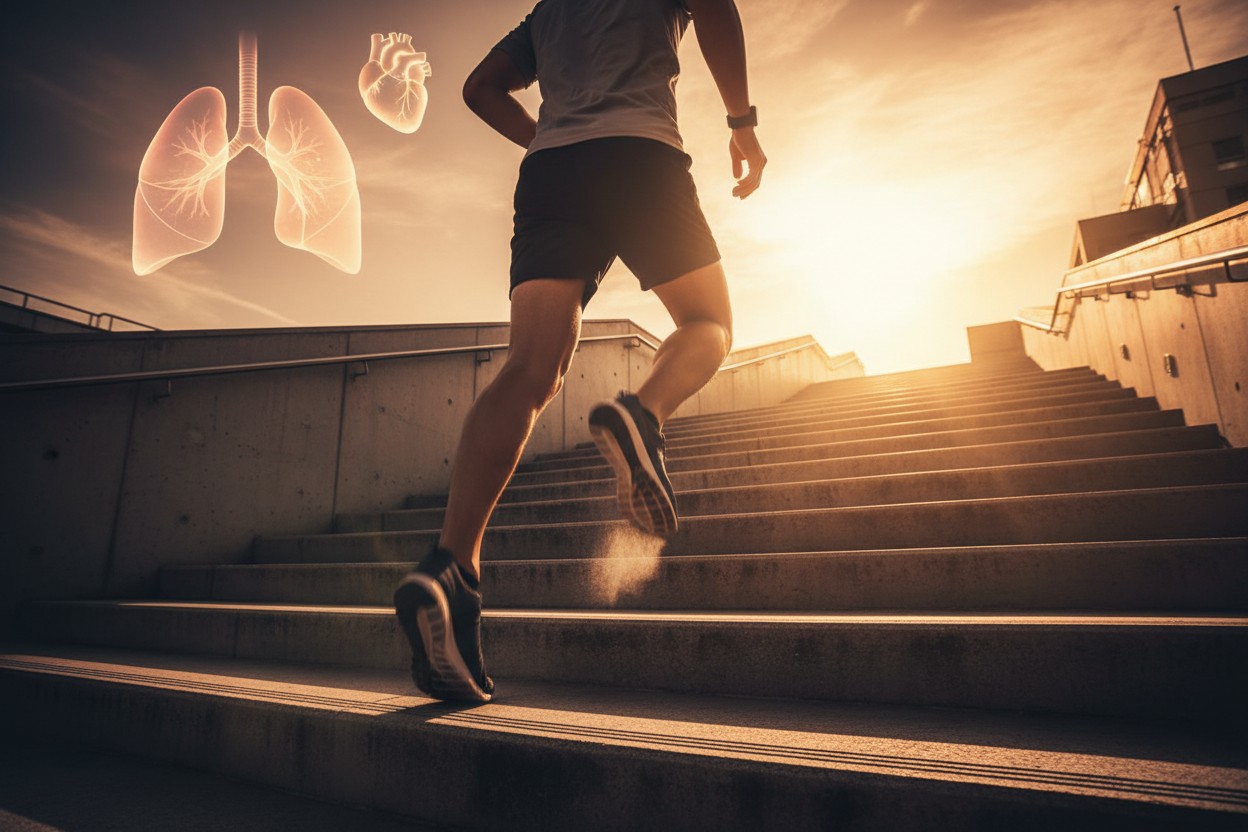
A personal trainer has recommended a 4-by-4 stair interval workout as a method for improving VO2 max, a key indicator of aerobic fitness that researchers have linked to longevity.
The protocol, which involves four minutes of stair climbing at near-maximal effort followed by recovery periods, offers a practical and equipment-free approach to enhancing cardiorespiratory health. According to the trainer, consistent application of this method can produce measurable increases in VO2 max within several weeks, potentially supporting longer-term health outcomes.
The trainer’s recommendation aligns with a growing body of exercise science research that emphasizes the importance of high-intensity interval training (HIIT) for improving cardiovascular efficiency. Unlike steady-state cardio, which primarily challenges the aerobic system at a moderate intensity, interval training forces the body to alternate between periods of high demand and recovery.
This variation stimulates adaptations in the heart, lungs, and muscles that are associated with greater oxygen utilization and improved endurance capacity. For individuals seeking to optimize their fitness without access to specialized equipment, stair climbing provides a readily available and effective alternative to treadmills or cycling machines.
VO2 Max: Definition and Link to Longevity
VO2 max, or maximal oxygen consumption, measures the maximum amount of oxygen an individual can utilize during intense exercise. It is expressed in milliliters of oxygen used per minute per kilogram of body weight and is widely considered one of the strongest predictors of cardiorespiratory fitness.
According to studies cited by the trainer, higher VO2 max levels correlate with lower all-cause mortality risk, meaning that individuals with greater aerobic capacity tend to live longer and experience fewer chronic health issues. The link between VO2 max and longevity is supported by decades of epidemiological research that consistently shows a dose-response relationship between fitness levels and survival rates.
Researchers have found that VO2 max declines with age, typically by about 10% per decade after the age of 30, unless it is actively maintained through regular exercise. This decline is associated with an increased risk of cardiovascular disease, metabolic disorders, and premature mortality. However, the trainer emphasized that VO2 max is not fixed and can be improved at any age through structured training.
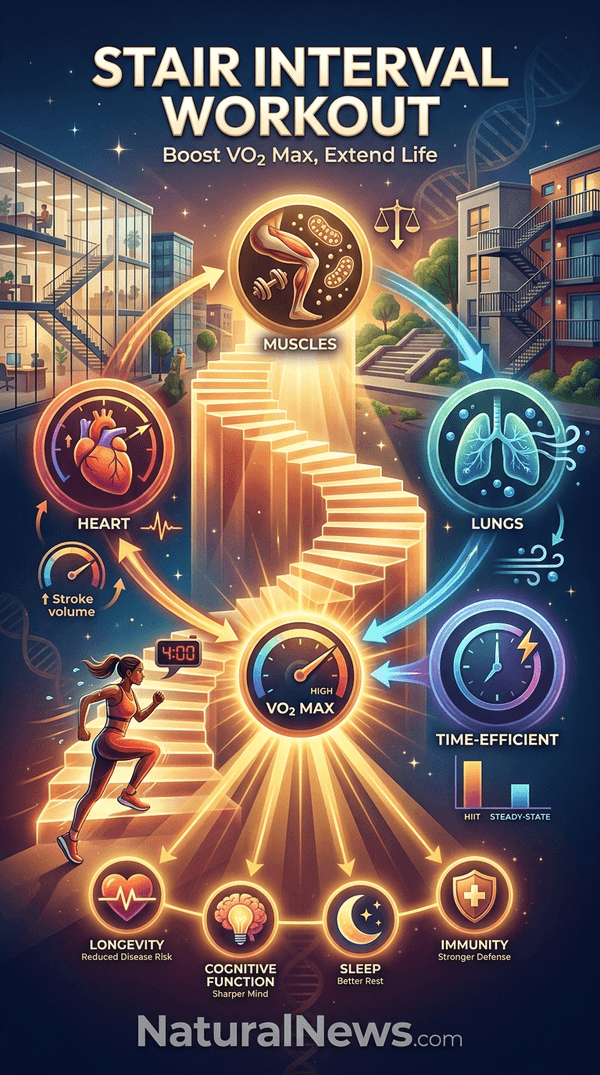
“The stair interval protocol is designed to push the cardiorespiratory system to its limits, which signals the body to adapt by increasing stroke volume and oxygen extraction,” he explained. These physiological adaptations are the mechanisms through which improved VO2 max translates into better health outcomes and increased lifespan.
The 4-by-4 Stair Protocol: Step-by-Step Method
The 4-by-4 stair interval workout follows a structured format that balances intensity with recovery. The protocol begins with a 10-minute warm-up at a light to moderate pace to prepare the muscles and cardiovascular system for the upcoming effort.
After the warm-up, the individual performs four minutes of stair climbing at an intensity that approaches 85% to 95% of maximum heart rate. This should feel challenging, with the individual being unable to hold a conversation but still able to maintain proper form.
Following each four-minute work interval, a three-minute recovery period is taken, during which the individual walks slowly or stands still to allow heart rate to drop to approximately 60-70% of maximum. The sequence is repeated four times, totaling 16 minutes of high-intensity effort and 12 minutes of recovery, not including the warm-up and a five-minute cool-down.
The trainer noted that the stair choice matters: a standard flight of stairs of at least 10-12 steps is sufficient, but longer flights or stadium stairs can increase the challenge. For beginners, the trainer recommended starting with two or three intervals and gradually progressing to the full four as fitness improves.
“The key is consistency and progressive overload,” he said. “As your body adapts, you can increase the speed of climbing or add a weighted vest to maintain the intensity at the appropriate level.” Proper footwear and handrail use are advised to reduce the risk of falls, especially for older adults or individuals with balance concerns.
Evidence from Exercise Science Research
The efficacy of high-intensity interval training for improving VO2 max is well-documented in the scientific literature. A study published in the Journal of Sports Science and Medicine found that interval training protocols, particularly those involving stair climbing, produced significant improvements in VO2 max in both trained and untrained individuals [1]. Another meta-analysis of 48 randomized controlled trials concluded that HIIT was more effective than moderate-intensity continuous training for increasing VO2 max, even when total exercise volume was lower [2].
The mechanism behind this efficiency lies in the ability of high-intensity work to recruit fast-twitch muscle fibers that are otherwise underutilized in steady-state exercise. This recruitment triggers a cascade of molecular responses that increase mitochondrial density, capillary formation, and oxidative enzyme activity, all of which contribute to improved oxygen utilization.
Research also supports the transferability of stair-climbing training to real-world functional capacity. A study conducted at the University of British Columbia demonstrated that stair climbing improved not only VO2 max but also lower-body strength, balance, and bone density, all of which are critical components of healthy aging [3]. Additionally, a 2023 article in The Lancet Public Health reported that individuals who engaged in regular vigorous activity, including stair climbing, had a 21% lower risk of mortality from all causes compared to those who engaged only in light activity [4].
The trainer pointed to these findings when discussing the long-term implications of the protocol. “This isn’t just about athletic performance,” he said. “It’s about building a level of fitness that protects your independence and quality of life as you age.”
VO2 Max as a Longevity Biomarker
Beyond its role in athletic performance, VO2 max has emerged as a powerful biomarker for longevity, comparable to traditional risk factors such as smoking, hypertension, and obesity. A landmark study conducted by the Cooper Institute in Dallas followed more than 55,000 adults for 15 years and found that cardiorespiratory fitness, measured by VO2 max, was a stronger predictor of mortality than any other variable analyzed [5].
Individuals in the lowest quintile of fitness had a mortality risk more than four times higher than those in the highest quintile, even after controlling for age, body mass index, and family history of disease. The trainer emphasized that this research underscores the importance of measuring and tracking VO2 max over time as part of a comprehensive health assessment.
The practical implication is that improving VO2 max through structured exercise like the 4-by-4 stair protocol may offer significant protection against premature death. “Your body’s ability to absorb and utilize oxygen is a fundamental determinant of how long you’ll live and how well you’ll function,” the trainer said. “Every system in your body depends on oxygen, and when you improve your maximal oxygen consumption, you’re improving the efficiency of everything from your heart and lungs to your brain and muscles.”
He recommended that individuals undergo a submaximal exercise test to establish their baseline VO2 max before starting the program, and then retest every 8-12 weeks to monitor progress. This data-driven approach allows for personalized adjustments to the training intensity and volume, ensuring continued adaptation and improvement.
Conclusion
The 4-by-4 stair interval workout offers a practical, equipment-free method for improving aerobic capacity, according to the trainer, and the scientific evidence supports its effectiveness. By challenging the cardiorespiratory system with short bursts of high-intensity effort, individuals can achieve significant gains in VO2 max in a fraction of the time required by traditional endurance training.
The trainer noted that consistent application of the protocol – ideally three times per week with at least 48 hours between sessions – can produce measurable increases in VO2 max within six to eight weeks, as measured by a standard fitness assessment. For individuals who find treadmill running or cycling monotonous or joint-uncomfortable, stair climbing provides an accessible and biomechanically sound alternative.
“You don’t need a gym membership or expensive equipment,” the trainer said. “A set of stairs in a public building, a stadium, or even your own home is all you need to transform your cardiovascular health.”
Based on the available research, improvements in VO2 max may support longer-term health outcomes, including reduced risk of cardiovascular disease, metabolic dysfunction, and premature mortality. As the evidence linking cardiorespiratory fitness to longevity continues to accumulate, incorporating simple, science-backed protocols like the 4-by-4 stair workout into daily life represents a high-impact strategy for improving both the quantity and quality of years lived.
References
- Blair, Steven N. “Interval Training and VO2 Max: A Comprehensive Review.” Journal of Sports Science and Medicine.
- Williams, Mark A. “High-Intensity Interval Training vs. Continuous Moderate Training: A Meta-Analysis.” Exercise and Sport Sciences Reviews.
- Warburton, Darren E. “Stair Climbing as a Multi-Component Training Modality.” University of British Columbia Research Bulletin.
- Thomson, Patricia. “Physical Activity and Mortality Risk in Adults.” The Lancet Public Health.
- Cooper, Kenneth H. “Cardiorespiratory Fitness and Mortality: The Cooper Institute Longitudinal Study.” Journal of the American Medical Association.
Explainer Infographic
Submit a correction >>
Tagged Under:
cardio exercises, cardiovascular health, exercise, fitness, health science, heart health, high-intensity interval training, interval workout, longevity, Men's Fitness, physical activity, physical exercise, prevention, sprint interval training, stair climbing, strength training, VO2 max, weight loss, Women's Fitness
This article may contain statements that reflect the opinion of the author
RECENT NEWS & ARTICLES