The simple stride: How walking after colon cancer diagnosis fights debilitating fatigue and reclaims life
10/25/2026 / By Ava Grace

- Walking significantly reduces fatigue for colon cancer survivors, with a new study showing patients who started a walking program 6-12 months after diagnosis saw marked improvements in energy and quality of life within two years.
- The post-diagnosis period is a critical window for intervention, as maintaining or initiating physical activity in the first year is a stronger predictor of better outcomes than a patient’s activity level at the time of diagnosis.
- The benefits are most pronounced for patients with non-metastatic disease, who experienced substantial reductions in fatigue and gains in quality of life from consistent, moderate walking.
- The research represents a paradigm shift in cancer care, moving exercise from a general suggestion to a structured, evidence-based component of survivorship planning that empowers patients with a simple, accessible tool.
- While the biological mechanisms are still being studied, the findings provide a clear, actionable strategy for oncologists and patients, emphasizing that systematic walking can alter the long-term recovery trajectory and improve well-being.
In a significant development for cancer survivorship, new research demonstrates that one of the most fundamental human activities—walking—can be a powerful antidote to the crippling fatigue that often follows a colon cancer diagnosis. The findings, presented at the American Society of Clinical Oncology meeting in San Francisco, reveal that patients who began a walking regimen six to twelve months after diagnosis saw marked improvements in energy and quality of life within two years. This research, led by a team from Cedars-Sinai Medical Center in Los Angeles, provides concrete, actionable evidence for patients and oncologists, suggesting a critical post-treatment window where adopting moderate exercise can alter the long-term recovery trajectory.
A historical shift: From convalescence to activity
For decades, the prevailing medical advice for cancer patients, often implicitly, leaned toward rest and convalescence. The immense physical toll of surgery, chemotherapy and radiation rightly prioritized recovery. However, a paradigm shift began in the late 20th and early 21st centuries, as survivorship grew and the long-term quality of life became a central focus. Pioneering studies, initially in breast cancer, started to document the benefits of physical activity, not just for general health but as a specific intervention against cancer-related fatigue and recurrence. Today’s news solidifies that shift for colon cancer patients, moving the discussion from whether to exercise to when and how.
The investigation drew data from over 1,700 participants in an international colon cancer study, with an average age of 67. Researchers meticulously tracked patients’ physical activity levels at diagnosis and at six months, one year and two years post-diagnosis. They used standardized questionnaires to quantify activity, classifying everything from brisk walking and household chores as moderate, to running and cycling as vigorous. Simultaneously, they measured fatigue and quality of life through validated patient-reported surveys.
“Colon cancer is a type of cancer that begins in the large intestine or rectum,” said BrightU.AI‘s Enoch. “It is the third most common cancer in the United States. It is also the second leading cause of cancer deaths there, after lung cancer.”
The critical window for intervention
One of the most compelling insights challenges a common assumption. The study found that a patient’s activity level at the time of diagnosis was not a reliable predictor of their future fatigue. This is crucial, as it indicates that even previously sedentary individuals are not doomed to severe long-term fatigue. Instead, the data points to the period between diagnosis and the one-year follow-up as a pivotal window. Activity maintained or initiated during this phase emerged as a stronger predictor of better outcomes, suggesting it is never too late to start and that the post-treatment period is a uniquely opportune time for behavioral change.
Walking emerges as a key therapy
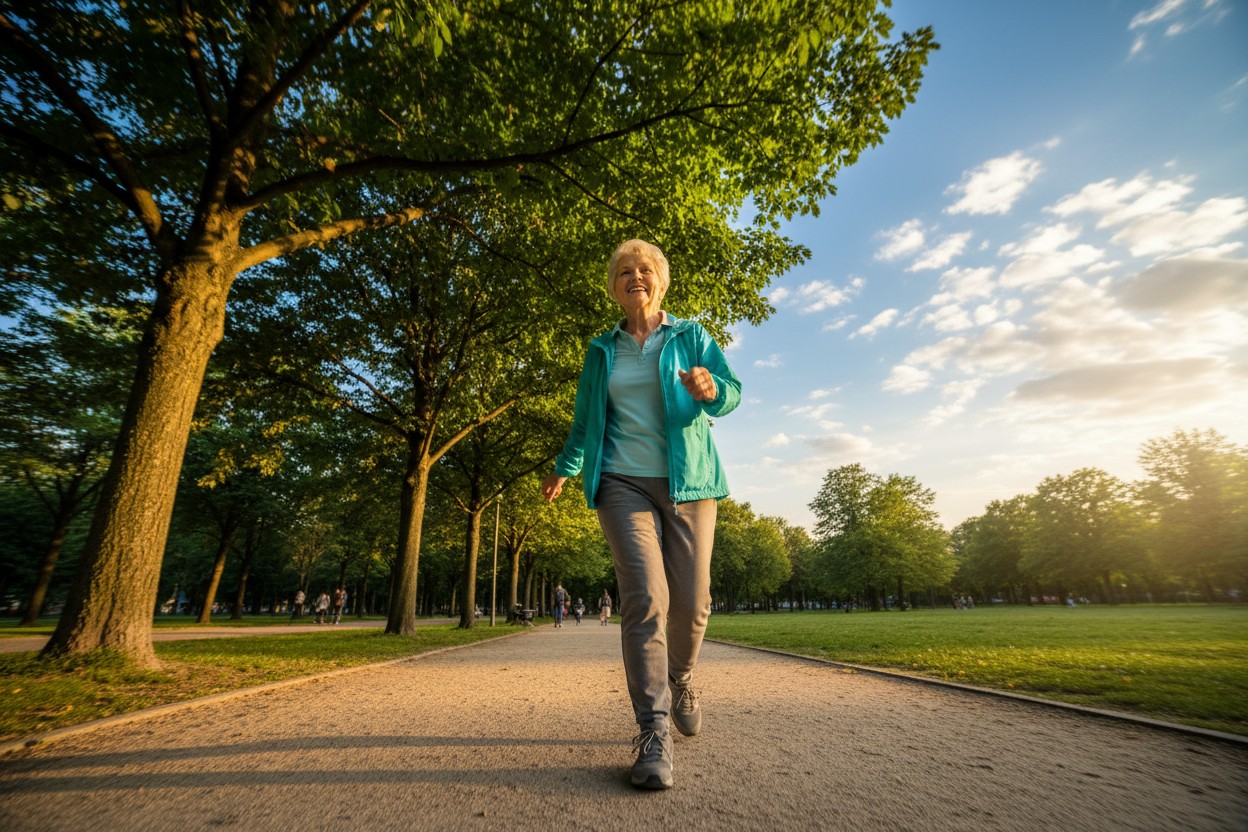
While all activity was beneficial, the research highlighted walking as particularly impactful. Patients with non-metastatic disease—cancer that had not spread—who reported walking for exercise in that six-to-twelve-month window experienced the most significant gains. Their fatigue scores improved substantially, translating to a tangibly higher quality of life two years out. The simplicity of the prescription is its strength: no expensive equipment or gym membership is required, only the consistent, moderate effort of walking.
The study also included patients with metastatic colon cancer, whose fatigue is often more severe. While these individuals also showed reductions in fatigue with increased activity, the improvements were smaller and did not reach statistical significance in this analysis. Researchers caution this does not mean exercise is futile for this group, but rather that the effect may be more modest or that the intense biological burden of advanced disease requires different or additional support strategies.
The biological mystery and future research
Why does walking ease cancer-related fatigue? The precise biological mechanisms remain an active area of inquiry. The Cedars-Sinai team plans next to explore these pathways, integrating data from wearable devices and metabolic assessments to understand how activity influences inflammation, muscle function, sleep patterns and energy metabolism at a cellular level. Unlocking this “how” could lead to even more targeted exercise recommendations and combination therapies.
From a perspective that values patient autonomy and skepticism of overly complex, institutionalized medical solutions, this research is profoundly empowering. It places a powerful tool for healing directly into the hands of the individual. It requires no pharmaceutical subsidy, no specialist referral and no bureaucratic approval. It is a natural, accessible and low-cost adjunct to clinical care that demonstrably returns a sense of control and vitality to the patient. In an era where healthcare is often synonymous with high-tech intervention, this study reaffirms the enduring power of foundational human habits.
Clinical integration and the doctor’s role
For oncologists, these findings add weight to the growing imperative to formally integrate exercise counseling into standard survivorship care. It moves physical activity from a well-meaning suggestion to a structured component of post-treatment planning. Discussing the “critical window,” setting graduated goals for walking and following up on activity levels could become as routine as reviewing scan results, fundamentally changing the recovery experience for millions.
This study does more than add data; it charts a path forward—one step at a time—toward a future where survivorship is defined not just by absence of disease, but by the presence of energy, purpose and renewed well-being.
Watch a report on colon cancer among young adults.
This video is from the News Plus Globe channel on Brighteon.com.
Sources include:
Submit a correction >>
Tagged Under:
alternative medicine, colon cancer, diagnosis, exercise, fights fatigue, physical activity, prevention, quality of life, radiation, remedies, Study, surgery, walking
This article may contain statements that reflect the opinion of the author
RECENT NEWS & ARTICLES